Rishikesh to Rishikesh
Add Ons



Valley of Flowers Trek — A Hidden Symphony of the Himalayas
Somewhere deep in the Garhwal Himalayas of Uttarakhand, cradled by snow-capped peaks and nourished by glacial rivers, lies a secluded valley that awakens briefly each year to reveal one of nature’s most spectacular performances — the Valley of Flowers. Hidden for much of the year beneath a heavy coat of snow, it bursts into bloom during the monsoon, blanketing itself in an ocean of wildflowers. For a short spell between July and September, this high-altitude meadow becomes a living tapestry of color, motion, and silence.
More than just a trek, the Valley of Flowers is a meditative walk through nature’s own sanctuary — a journey that weaves through silence, mist, and myth.
A Valley Born of Legends and Discovery
The valley isn’t just a marvel of botany; it’s a place steeped in mythology and serendipity. According to local legends, it was once the garden of the gods. Locals believed the valley was inhabited by fairies and spirits, and so they avoided entering its realm, afraid of disturbing the celestial order.
It remained unknown to the modern world until 1931, when British mountaineer Frank Smythe accidentally stumbled upon it while returning from an expedition to Mount Kamet. Enchanted by the sight, Smythe later wrote:
“The Valley was about six miles long, and two miles wide; a valley of peace and perfect beauty where the human soul might find repose.”
Today, this same valley — now protected as part of the Nanda Devi Biosphere Reserve — is a UNESCO World Heritage Site, internationally recognized for its unique alpine flora and fragile ecological significance.
The Route to Paradise
The trek to the Valley of Flowers begins at Govindghat, a small settlement located on the banks of the Alaknanda River. It’s a 10–11 hour drive from Rishikesh, winding through steep mountain roads, with the Ganga, then the Alaknanda, flowing tirelessly beside you.
From Govindghat, a 4 km drive leads to Pulna, the last motorable village. The real trek begins here. Over the next 9–10 km, the trail gradually ascends to Ghangaria (3,050 m), a quaint village with wooden lodges, teahouses, and a distinct mountain calm. Surrounded by cliffs and forests, this village acts as the base camp for both the Valley of Flowers and the Hemkund Sahib Treks.
The trek from Ghangaria to the valley is approximately 4 km. It starts with a steep climb, eventually easing into a narrow path flanked by mossy rocks, rhododendron trees, and misty pines. As you near the valley, the landscape begins to open — and then, quite suddenly, the flowers appear
Where the Earth Blooms
The moment the valley unveils itself is unforgettable. Stretching across a floor nearly 8 km long and 2 km wide, the Valley of Flowers is a vibrant expanse of Rolling Meadows surrounded by imposing mountain walls. Unlike any botanical garden, this one is wild, unarranged, and free — flowers bloom where they will, creating a raw and natural mosaic of colors.
Depending on the time of the visit, the flowers differ. Early July sees a burst of whites and yellows — anemones, marsh marigolds, and primulas. By late July and August, the valley is ablaze with blues, purples, and reds — blue poppies, geraniums, bellflowers, zinnias, and the rare cobra lily. The Brahma Kamal, Uttarakhand’s state flower, blooms higher up, near Hemkund Sahib, and is revered for both its beauty and spiritual symbolism.
There’s no single highlight. The entire valley is the highlight. Every few meters, the colors shift subtly, the scent changes, and the breeze carries a different rhythm. The soundscape here is unique — no cars, no chatter — just the murmur of the Pushpawati River, the buzz of bees, and the occasional chirp of a Himalayan monal darting through the fog.
Trekking Conditions and Terrain
The trek is classified as easy to moderate. While there are steep sections, especially from Ghangaria to the valley and to Hemkund Sahib, most of the trail is well-defined. The monsoon season, though, adds its own complexity — the path becomes slippery, water crossings rise, and rain gear becomes essential. But it’s also the monsoon that gives life to the valley, turning the landscape lush, vibrant, and alive.
The total distance covered over the trek is around 38–40 km, spread over 5 to 6 days, depending on the chosen itinerary. Trekkers often acclimatize in Ghangaria before venturing higher.
Hemkund Sahib – A Sacred Ascent
For those willing to ascend further, a steep 6 km climb from Ghangaria leads to Hemkund Sahib, one of the world’s highest Sikh shrines, perched beside a glacial lake at an altitude of 14,100 feet. Surrounded by seven snow-capped peaks and mist-veiled ridges, the location is otherworldly.
Even for non-religious trekkers, the spiritual energy of the place is undeniable. Pilgrims chant hymns as they climb, and the calm of the lake mirrors the mountains above. The Brahma Kamal, known to bloom only at high altitudes, is often spotted here in its full glory.
The return journey to Ghangaria is equally humbling, with tired legs but a full heart.
The Monsoon Mood
Unlike typical trekking seasons that favor dry skies and crisp winds, this journey thrives in the wet. The monsoon breathes life into the region, feeding rivers, filling waterfalls, and coaxing the flowers from their dormancy.
Clouds constantly roll in and out, giving the valley a mystical, shape-shifting quality. One moment the valley is bathed in golden light, and the next it’s wrapped in a grey veil of rain. Raincoats are essential, but so is surrender — for here, the rain is not an inconvenience, but the very reason the valley exists.
Biodiversity and Beyond
The Valley of Flowers isn’t just about aesthetics. It’s an important part of the Himalayan ecosystem. Apart from the thousands of plant species, the valley is home to several rare and endangered animals. While sightings are rare, the valley supports creatures such as:
- The snow leopard
- The Asiatic black bear
- The red fox
- The elusive musk deer
- And several species of butterflies and migratory birds
Botanists, conservationists, and researchers frequent this region for its unique alpine biodiversity, and entry to the core valley is regulated to preserve its fragile balance.
What Stays With You
Most treks are about reaching somewhere — a summit, a view, a goal. The Valley of Flowers is different. It’s about being somewhere.
Here, the destination is not just a point on the map. It’s a mood, a memory, a state of awe that washes over you and then lingers. There’s no flag to plant, no victory to claim. You simply walk — among wildflowers, through light rain, under shifting skies — and in the process, something quiet and powerful blooms within you, too.
It’s a reminder that nature doesn’t need to shout to be heard. Sometimes, it just whispers through petals and mist, inviting us to slow down and listen
Short Itinerary
Day 1: Rishikesh to Joshimath
Drive – 247km / 9–10 hrs, Altitude: 1,800–1,875 m / 6150 ft
Day 2: Govindghat to Ghangaria
Trek – 13 km / 6–7 hrs, Altitude: 3,050 m / 10,200 ft
Day 3: Ghangaria to Valley of Flowers & Back
Trek – 10–12 km (round trip) / 5–6 hrs
Day 4 (Optional): Ghangaria to Hemkund Sahib & Back
Trek – 12 km (round trip) / 6–7 hrs, Altitude: 4,329–4,632 m / 14,200–15,197 ft
Day 5: Ghangaria to Govindghat → Drive to Joshimath
Trek – 13 km / 5–6 hrs, Drive – 20 km / 1 hr
Day 6: Joshimath to Rishikesh
Drive – 247 km / 9–10 hrs
Highlights:
- 5% GST will be applicable on Trek Cost and Add-on
- Services Joshimath to Joshimath.
- Meeting Point( Pickup/ Drop Point ): Rishikesh
(If transportation opted from Trekoholics) - Reporting Time: 6:00 am
- Drop Time: 6:30 pm to 7:30 pm (Timings are subject to change based on weather and road conditions).
- Please reach Rishikesh a day before to avoid any delays.
Detailed Day-by-Day Itinerary
Day 1: Rishikesh to Joshimath
Altitude: 1,875 m / 6,150 ft
Distance: 247 km
Duration: 9–10 hrs (Drive)
Your journey begins from Rishikesh as you drive along the scenic Alaknanda River, passing through the sacred confluences of Devprayag, Rudraprayag, and Karnaprayag. The road winds through deep valleys, pine forests, and charming hill towns, offering breathtaking views throughout the journey. By evening, you reach Joshimath — a beautiful mountain town and base for many Himalayan treks. Check in to your hotel/guesthouse, relax, and prepare for the trek ahead.
Day 2: Joshimath to Govindghat → Trek to Ghangaria
Altitude: 3,050 m / 10,200 ft
Drive Distance: 20 km / 1 hr
Trek Distance: 13 km
Duration: 6–7 hrs
After an early breakfast, drive from Joshimath to Govindghat — the starting point of your trek. The trail follows the Alaknanda and later the Pushpawati River, gradually ascending through forests, waterfalls, and small dhabas along the route. You can also opt for a mule or porter if required. Reach Ghangaria by evening, a small settlement nestled amidst mountains. Overnight stay in a guesthouse/hotel.
Day 3: Ghangaria to Valley of Flowers & Back
Altitude: 3,500–3,650 m / 11,500–12,000 ft
Trek Distance: 10–12 km (round trip)
Duration: 5–6 hrs
Today is the most beautiful day of the trek. Enter the Valley of Flowers National Park, a UNESCO World Heritage Site known for its vibrant alpine flora. Walk through vast meadows filled with colorful wildflowers, glacial streams, and mist-covered mountains. The valley feels like a natural paradise untouched by time. Spend time exploring and capturing the beauty before returning to Ghangaria for the night.
Day 4 (Optional): Ghangaria to Hemkund Sahib & Back
Altitude: 4,329–4,632 m / 14,200–15,197 ft
Trek Distance: 12 km (round trip)
Duration: 6–7 hrs
For those seeking a spiritual and challenging experience, trek to Hemkund Sahib, one of the highest Gurudwaras in the world. The steep climb takes you through rocky terrain and alpine landscapes. At the top lies a sacred glacial lake surrounded by towering peaks. After spending time at this serene location, descend back to Ghangaria for an overnight stay.
Day 5: Ghangaria to Govindghat → Drive to Joshimath
Altitude: 1,875 m / 6,150 ft
Trek Distance: 13 km
Duration: 5–6 hrs (Trek)
Drive Distance: 20 km / 1 hr
After breakfast, begin your descent back to Govindghat along the same scenic trail. The downhill walk is easier and offers a chance to revisit the beautiful landscapes you passed earlier. From Govindghat, drive back to Joshimath. Evening at leisure with an overnight stay.
Day 6: Joshimath to Rishikesh
Distance: 247 km
Duration: 9–10 hrs (Drive)
After breakfast, begin your return journey to Rishikesh, retracing the scenic Himalayan route along the Alaknanda River. Reach Rishikesh by evening with unforgettable memories of one of India’s most beautiful treks.
Valley Of Flowers Trek – Fitness Preparation Plan
Max Altitude: 4,329 m / 14,107 ft | Grade: Moderate
The Valley Of Flowers Trek is not extremely difficult, but being physically prepared will make your journey smoother, safer, and far more enjoyable. On this trek, you’ll be walking 10-13 km daily, often with gradual ascents and descents, so stamina and strength play a key role.
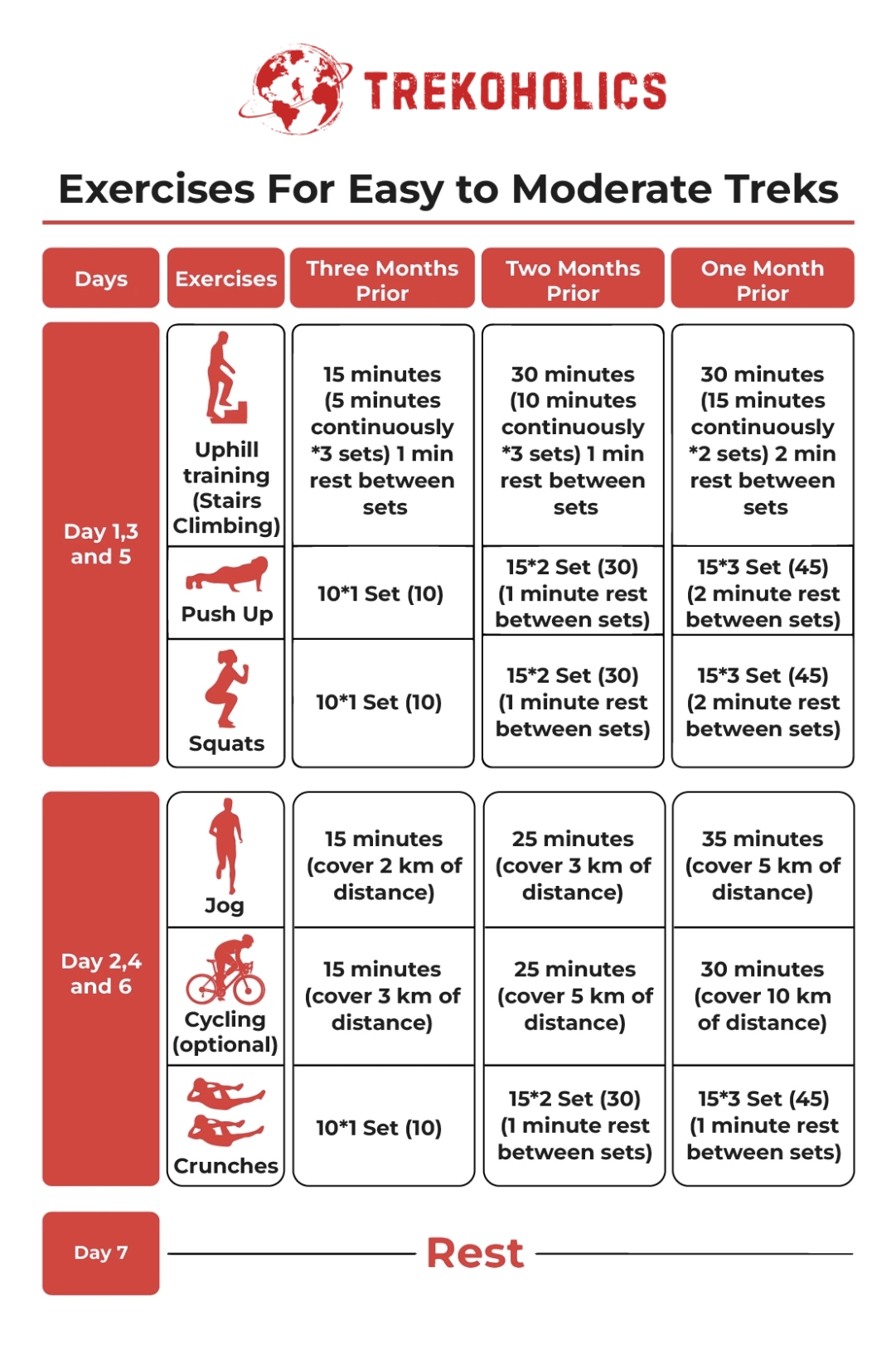
Trekoholics recommends following this 8–10 week fitness routine before your departure. The plan is designed for easy-to-moderate Himalayan treks like Valley Of Flowers and perfectly matches the training chart provided below.
Day-Wise Training Plan
Day 1, 3, and 5 – Strength & Uphill Training
- Uphill Training (Stair Climbing):
- 3 Months Prior: 15 minutes (5 min continuous × 3 sets, 1 min rest)
- 2 Months Prior: 30 minutes (10 min continuous × 3 sets, 1 min rest)
- 1 Month Prior: 30 minutes (15 min continuous × 2 sets, 2 min rest)
- Push-Ups:
- Start with 10 reps × 1 set, progress to 15 reps × 3 sets
- Squats:
- Start with 10 reps × 1 set, progress to 15 reps × 3 sets
These exercises build leg and upper body strength to handle uneven terrain and a backpack.
Day 2, 4, and 6 – Endurance & Core Training
- Jogging / Brisk Walking:
- 3 Months Prior: 15 min (cover 2 km)
- 2 Months Prior: 25 min (cover 3 km)
- 1 Month Prior: 35 min (cover 5 km)
- Cycling (Optional):
- 3–5 km at the start, progressing to 10 km in 30 minutes
- Crunches:
- Start with 10 reps × 1 set, progress to 15 reps × 3 sets
These activities improve cardiovascular stamina and core balance for long trekking hours.
Day 7 – Rest & Recovery
Take a rest day every week to allow your muscles to recover and avoid fatigue. Recovery is just as important as training.
Why This Matters for Valley Of Flowers
- Stamina: Helps you comfortably walk 5–6 hours per day on mountain trails.
- Strength: Prepares your legs and back to manage ascents and descents with a backpack.
- Flexibility: Keeps your body light and reduces the chance of injuries.
- Confidence: A fit body means you can fully enjoy the trek..
Essential Things to Carry for Valley Of Flowers Trek
Backpack & Bags
- Backpack (40–50L): Waterproof, lightweight, with hip/shoulder support.
- Daypack (10–20L): For daily essentials if main bag is offloaded.
- Rain Cover / Poncho: Protects both body and backpack.
Shoes & Socks
- Trekking Shoes: Good grip, ankle support, water-resistant (e.g., Decathlon Trek/MH series).
- Socks: 3–4 pairs sports socks + 2–3 pairs woolen/synthetic socks.
Clothing
- Base Layer: 3–5 dry-fit full-sleeve T-shirts or Shirts (collared preferred for sun protection).
- Insulation Layer: 1 padded jacket + 1–2 thin sweaters/fleece. Avoid bulky wool.
- Trek Pants: 2–3 pairs quick-dry/stretchable trousers (avoid jeans/cotton).
- Thermal Innerwear: Optional but recommended for high altitude nights.
Accessories
- Caps: Sun cap + woolen cap/Balaclava.
- Glasses: UV-protected sunglasses (snow protection).
- Headlamp: With wide coverage (keep hands free).
- Trekking Poles: Pair preferred for better balance & reduced fatigue.
Personal Essentials
- Cutlery: Lightweight steel (plate, mug, spoon).
- Water Bottles: Two 1L bottles (carry 1 thermos for hot water in winters).
- Toiletries Kit: Toothbrush, paste, moisturizer, facewash, soap, toilet roll, sanitizer, small towel.
- Women: Sanitary pads/menstrual cup + disposal bags.
Medical Kit (Recommended)
- Diamox (AMS prevention)
- Dolo 650 (fever)
- Avomine (motion sickness)
- Avil 25mg (allergies)
- Combiflam (pain relief)
- Disprin (headache)
- Digene (acidity)
- Norflox TZ & Lomofen (diarrhea)
- ORS sachets
- Omez / Rantadine (antacids)
- Crepe bandage (3–5m)
- Gauze & cotton roll
- Band-aids (various sizes)
- Betadine / antiseptic cream
- Moov / Volini spray (aches & sprains)
- Knee caps (if prone to strain)
- Hot water bag (for winter treks)
Cancellation Charges & Refund Options
1. Cancellations made 25+ days before trek start date
-
Refund Options:
- 5% deduction of trek fee, balance refunded in cash, OR
- 100% trek voucher (valid for any trek within 1 year), OR
- Transfer booking to a friend (any trek, any date).
2. Cancellations made 15–24 days before trek start date
-
Refund Options:
- 30% deduction of trek fee, balance refunded in cash, OR
- 100% trek voucher (valid for the same trek within 1 year), OR
- 85% trek voucher (valid for any trek within 1 year), OR
- Transfer booking to a friend (same trek, any date).
3. Cancellations made 10–14 days before trek start date
-
Refund Options:
- 50% deduction of trek fee, balance refunded in cash, OR
- 80% trek voucher (valid for the same trek within 1 year), OR
- 70% trek voucher (valid for any trek within 1 year), OR
- Option to rebook the same trek in the same season with another batch, OR
- Transfer booking to a friend (same trek, any date).
4. Cancellations made less than 9 days before trek start date
-
Refund Options:
- No cash refund, OR
- 20% trek voucher (valid for the same trek within 1 year), OR
- 10% trek voucher (valid for any trek within 1 year), OR
- Transfer booking to a friend (same trek, same date only).
Special Emergency Cancellation Policy
In cases of genuine emergencies, even cancellations made 1 day prior to trek start are eligible for:
- 90% cash refund + 10% voucher (valid for 1 year, any trek in India)
Applicable only in the following cases (with valid proof):
- Death in immediate family (parents, spouse, children, siblings).
- Hospitalization of the participant (minimum 48 hours).
- Fracture (arm/leg) within 7 days before trek start.
Important Terms & Conditions
- Change of trek batch is subject to seat availability.
- Transfer of booking to a friend is allowed only if they meet the mandatory eligibility criteria.
- Trekoholics reserves the right to amend or cancel these policies without prior notice.
Booking & Payment Terms
- Verify all booking details (dates, documents, participant info) at the time of reservation.
- Payments must be completed within the specified timeline to confirm a seat.
- Cash refunds apply only to payments made in cash. Payments made via voucher, discount, promo code, or non-cash methods are non-refundable in cash.
- Refunds (if applicable) will be processed within 15–30 working days.
Voucher Terms
- Vouchers are non-transferable and cannot be combined with other offers.
- Valid only for treks booked directly with Trekoholics in India.
- Must be redeemed using the registered participant’s email ID or phone number.
- All standard trek booking terms also apply to vouchers.
Itinerary Modifications
- Trekoholics may modify, shorten, or cancel a trek due to weather conditions, transport delays, health emergencies, or other operational reasons.
If Trekoholics cancels before trek start:
- You may select an alternate trek/date, OR
- Accept a trek voucher valid for 1 year, OR
- Transfer booking to another trek (paying any price difference).
If a trek is abandoned after it begins, no refund or voucher will be issued.
Force Majeure Clause
Trekoholics will not be held liable for cancellations or changes caused by factors beyond its control, including but not limited to:
- Natural calamities (landslides, earthquakes, storms, heavy snowfall/rain).
- Strikes, curfews, war, pandemics, government restrictions.
- Road blockages, trail closures, or permit withdrawal by authorities.
Inclusions
- Accommodation (as per itinerary)
- Guesthouse stay on Day 1 & Day 5 (Triple/Quad sharing).
- Ghangaria for Day 2,3,4.
- Meals (Vegetarian + Egg)
- All meals from Joshimath to Joshimath.
- Starting from Day 1 Dinner to Day 5 Dinner.
- Support Team
- 1 Versatile Base Camp Manager – handles communication and emergency manpower deployment.
- 1 Mountaineering & First Aid certified professional trek leader.
- 1 Experienced high-altitude chef.
- Local, experienced trekking guides (number depending on group size).
- Adequate support staff for smooth operations.
- Trek Equipment
- Sleeping bag, sleeping liners (on request), mattress, and utensils.
- All-season trekking tents (Dual/Triple), kitchen & dining tent, toilet tent.
- Camping stools, walkie-talkies.
- Ropes, helmets, ice axe, harness, gaiters, and microspikes (if required).
- First Aid
- Complete medical kit, stretcher, oxygen cylinder, blood pressure monitor, oximeter, stethoscope.
- Transportation (as per itinerary)
- Rishikesh to Joshimath & Joshimath to Rishikesh (if booked through Trekoholics as an add-on).
- Joshimath to trekking start point.
- Cloak Room Service – available at the basecamp.
- Mules/Porters – for carrying central luggage.
- Permits & Entry Fees – all necessary permits included (for Indian Nationals).
- Trek Completion Certificate – issued by Trekoholics after successful trek completion.
Exclusions
- Trek Insurance – for Indian Nationals/Trek Insurance for Non-Indian Nationals (including NRI or OCI card holders).
- Food during transit.
- Any kind of personal expenses.
- Mule or porter service for personal luggage.
- Emergency evacuation, hospitalization charges, etc.
- Additional costs due to itinerary changes caused by natural calamities, roadblocks, vehicle breakdowns, or factors beyond control.
- Anything not mentioned in the "Inclusions" section.
Here is what trekkers have to say about their experience at Valley of Flowers Trek
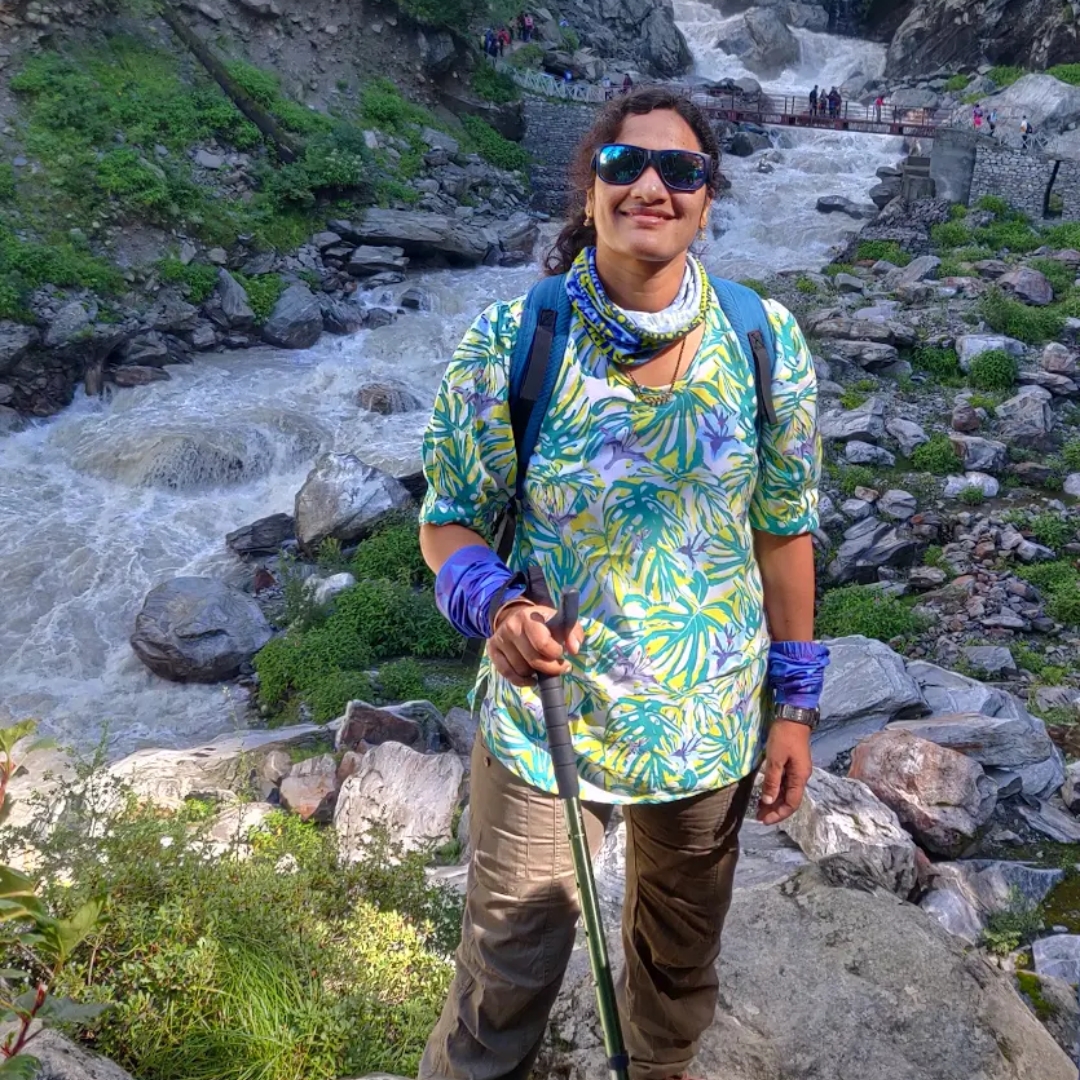
Done valley of flowers and Hemkund saheb lake with eco hiking . Manmohan ji and Devender ji are too good . They cares each and every one of the team members . Food , stay are extremely comfortable.
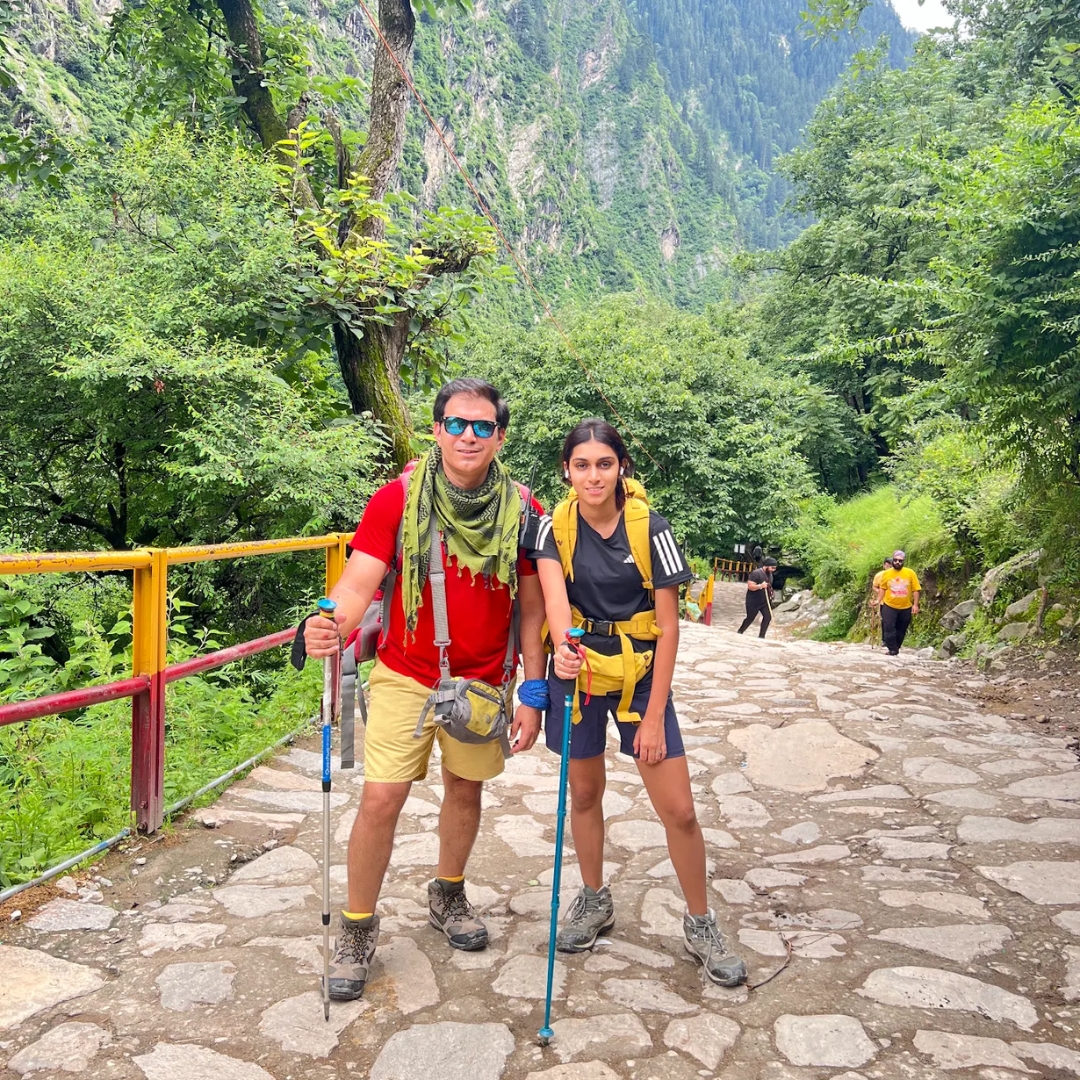
I recently did valley of flowers and Hemkund saheb Gurudwara trek along with my daughter with team Trekoholics . It was an amazing and wonderful experience. Everything was well planned in term of travel,stay , food , and also executed as planned . The best part of Trekoholics is they are ready to customize plan as per your need . Its my fourth trek with them ,everytime they comes out better than before .we had a great group of diversified people ..seasoned trekkers,young kids ,old young trekker ,1st time trekker…but with Devender bhai & Manmohan bhai it was an pleasant & memorable experience for all of us . If someone is planning trek with family I can vouch for this team.Being locals they have indepth knowledge & connections . Devender bhai always have a big smile on his face in any situation & always ready to help you on trek. “Devender Bhai ke banaye pakode yaad rahenge” Valley of flowers was a wonderful trek with lush green sceneries,lots of waterfall & plenty of flowers…..after 5km of continuous ascent when we reached Valley of flowers 💐 3658 m,it was feast for the eyes ,beauty of valley with glacier on the top and Pushpavati river flowing through the valley mesmerized even our soul….in 1992 VOF designated as World Heritage Site…. Next day when we went for Hemkund saheb trek it was an altogether a different spritual trek ,it test your endurance and dedication as trek has continuous steep ascent surrounded by beautiful valley,waterfalls and 🌺, top of that we climbed 1182 stairs as a short cut to reach Gurudwara as the final stretch of 7km trek…it was so spritual,peaceful and divine…listening to Gurbani near the holy lake just took me to another plane… Next day on 15 Aug we joined the flag hoisting ceremony at Ghangaria… On the way back Manmohan bhai on our request took us to Badrinath dham and Mana village …special thanks to Team Trekoholics for that…

Wonderfull experience with Trekoholics!! We have successfully completed Valley of Flower, Hemkund Shahib trek and after that visit Managram, Badrinath. Everything from pick up to drop was very well planned and executed. Our guide whome we called Devendra Bhaiya is a wonderful person. He made every moment very comfortable even in 14500ft. Would highly recommend him as well as Eco-Hiking and Manmohan Bhai for anyone who wants to have a good experience. If you are first time in trek, they will guide you throughout.
.png)
Very good experience!! Devender Bhai and Manmohan Bhai supported through out. Good food and stay arrangements and guide helped us through out the travel. Did valley of flowers and Hemkund with them.
Available dates
Click on available dates to Register
- What the colours mean
- Available:Registration is on.
- Full:Indicates the group is full. No further slots are likely. A full group has 18 members.
Dates not suiting you? Click here to customize your trip.